

TAC was formed over 25 years ago as a luncheon club for community elders. Their work has since expanded to cover a whole range of activities from health checks to holidays to food hampers! Or, as Annette Leader, Chair of TAC, puts it: “everything from dominoes to bereavement support”.
We took the chance to chat to Annette about the incredible support they offer, the impact of Covid-19 and the challenges they face.
Understanding the community
What makes TAC different from other organisations for older people is that it has grown organically around the interests and needs of the local African and Caribbean community, over the course of 25 years.
This gives them two main advantages. Firstly, they are able to put on services that are relatable and culturally appropriate. As Annette explained, “We exist to support and help the Caribbean seniors – to fill the gap where they don’t see the mainstream organisations (for older people) are for them. We put a Caribbean twist on what we do.”
Secondly, through their deep community roots, TAC have been able to develop trusting relationships, not only with their beneficiaries but also with local religious groups, statutory services, and charities. This has enabled them to give far more personalised and holistic support than other organisations for older people.
TAC see their work as complementing, rather than competing with, national groups. They frequently host visits from other groups working with their demographic, as well as from the NHS and local government. Annette believes that their community will often be more receptive to information or support being offered when they hear about it through TAC due to their “strong, trusting bond”.
Fun comes first
Fun and community lie at the heart of what TAC do. Although they have a wide range of support available, what keeps people coming back is the chance to see their friends, reminisce and create new memories together.
“We have members who are 96 years old who love to have fun and go out. TAC is about having fun, getting out of the house, meeting friends, enjoying yourself. I have the headache of the funding, their bit is having fun – enjoy their time together. For me that’s the most important thing – for them to be able to come out to somewhere that they’re not miserable, not depressed and where they can have a laugh with their friends. They’ve been together since the 50s, bringing up their families, working in places like Trafford Park and joining political campaigns where needed. A lot of it is about them continuing that community”.
What does TAC offer?
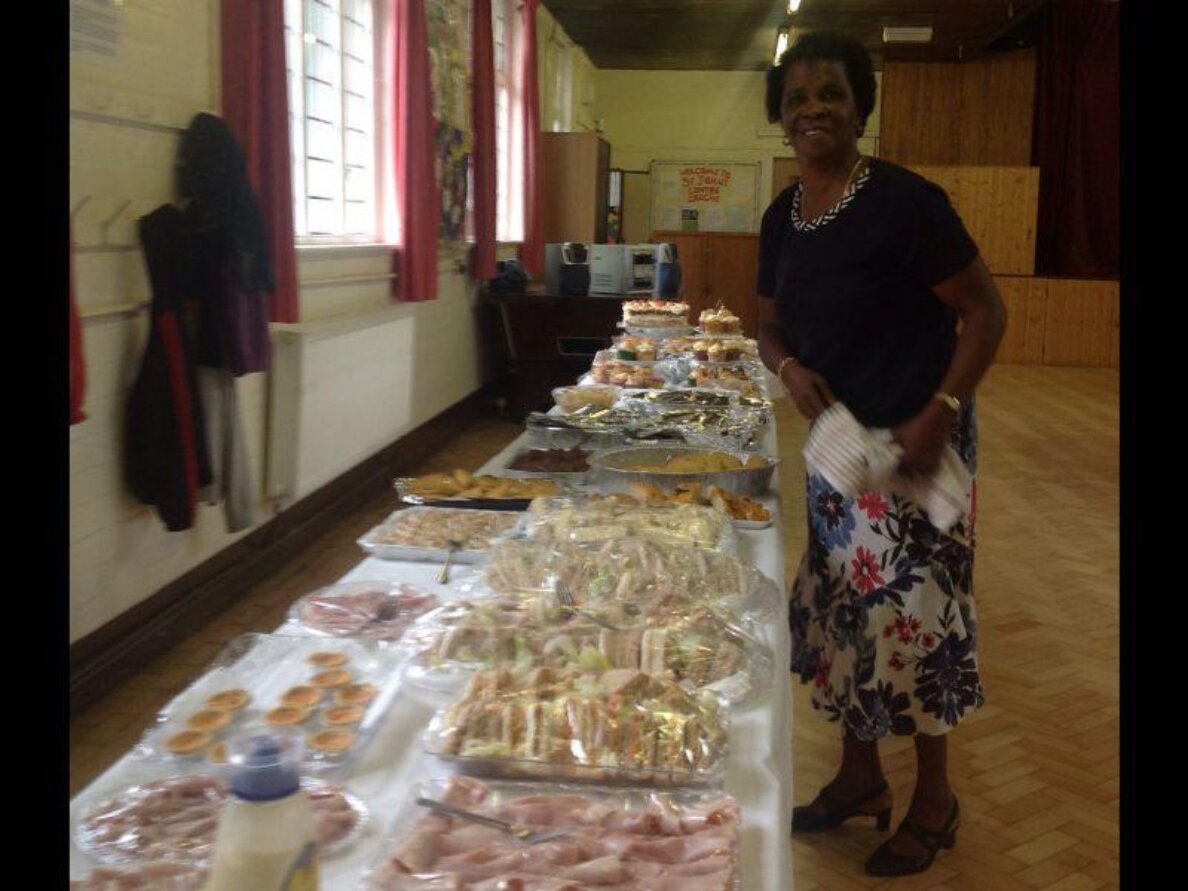
TAC was built around a Wednesday luncheon club and this remains the focal point of their week.
“We provide a social space to elderly people where they can meet up with their relatives and friends… It is a social hub really. It is essential for the group for their loneliness, their vulnerability, and their isolation.”
It is usually during these Wednesday afternoon sessions that other organisations are invited (or request an invite) to give information and carry out presentations.
“They have keep fit at 12pm, lunch at 1pm, followed by announcements, bingo and dominoes until 4pm,” Annette explains. “[Other groups] are able to come in on Wednesdays. We give them a ‘hearing’ after lunch and before the bingo!”
However, the Wednesday club is only a small part of what TAC offer. The group often go on trips together, from “seaside ports like Blackpool and Southport” to theatre, comedy, dance shows. These trips are chosen collectively. The group are often keen to attend and support Black and Caribbean art, or to go to see shows in which their children or grandchildren are performing.
They have also organised holidays together and with each other’s families. One holiday included a Caribbean cruise during which they explored different islands and exchanged views of differences and similarities to their own birthplaces.
“A highlight of the Caribbean cruise was being received at Government House in St Kitts”, said Annette. “The Hon Sir Tapley Seaton, Governor of St.Kitts-Nevis, hosted a reception for the group. Here, we met our counterparts – the island’s Senior Citizens Group who shared their history and ethos, whilst entertaining us with a fashion show, music and poetry”.
TAC continually adapts its work to meet the needs of their community. These currently include running a foodbank and food distributions, health check-ups and advice, therapists, support with isolation and grief, and exercise and dance classes.
One of the more unique services offered by TAC is their holistic bereavement support. What makes this service so effective is that it recognises and provides for a whole range of needs – practical, emotional and financial.
“It is a really important thing in our community that when someone passes you support the person who has been left behind and their family. Sometimes the family will come up to TAC because they want that connection to the person that’s left. We make sure someone is there for them every day. We also provide a small grant and carry out a collection because funerals are very expensive. We help with the funeral itself. After the funeral we provide support because when the people have gone can be when its hardest, when it gets quiet.”
“That service has become an official feature of our organisation: to say we will support you – financially, emotionally and physically.
What can be learned from the Torbay experience?
It would be easy to look at the TCDT experience and say they had a unique set of circumstances and that these circumstances enabled them to build this ecosystem. Their work as a CVS meant they had excellent connections across the community and voluntary sector. The pandemic made funders and the local authority more flexible. This time also coincided with an uptick in community spirit and people offering their time and skills.
However, there are a number of key learnings that can be taken from the ‘Torbay Model’.
The funding challenge
Like most community groups across the country, funding is constant issue faced by TAC. Annette readily admits that when she first began to run TAC, she was a little naïve as to how challenging the funding game can be.
“I came in blazing, thinking ‘This is madness – we should have our own building and staff! But battling to get those things has been futile…You scrabble around for £500 or £1,000 here and there. That’s just a bit of seed money to stop total collapse. We’ve been running on empty for years.”
“If there is no money we still just get on with it, but we want to progress. The services are restricted because we don’t have funds. We are trying to do everything with volunteers – I work as well. We need staff – we don’t have the full capacity to apply for grants, so we miss deadlines.”
She believes that one of the main problems is that the value that groups like TAC bring is not easily measured and that funders are often far more interested in projects that provide emergency or practical support. “If you’re not viewed as matching their agenda, you’re not important, vital or crucial, so you won’t get funding…. We have to somehow set our agenda in the context of their funding strategy – not always an easy fit.”
However, where they have been able to develop long-term relationships with funders, they have had more success. TAC’s most consistent funding has come from Bluesci and Trafford Housing Trust. “Some funding organisations will really help and explain what you can do, particularly if you’re local or you can have a personal relationship with the funder. They provide the funding and support.”
Annette told us that over the last year, particularly with the increased focus on “BAME-led groups” due to the pandemic and Black Lives Matter movement, there has been a noticeable increase in funding opportunities. “We are now getting attention. We received a substantial amount from the National Lottery and we extended our foodbank. Our turnover was £16,000 this year due to COVID support, the highest we’ve had in 25 years. Most years it’s £2,000-5,000; some years it’s been nothing.”
This said, many of TAC’s activities are still self-funded or funded by beneficiaries. For example, they have set up a savings club for beneficiaries, where they put in a small amount each week to pay for bigger things later from holidays to Christmas celebrations.
Looking ahead
Funding difficulties have not dampened Annette’s ambitions for TAC.
“My ambition for the group has not changed from when I joined. TAC should firstly be respected for the service it provides – if given this the rest should follow. Our ‘wishlist’ is not rocket science. It should be standard for organisations performing a vital service.” Annette would like to be able to hire a staff team rather than relying on employers. TAC would also benefit from their own building, medical support, a van and a driver.
“You can sit there as a black, elderly community and think ‘nobody gives a damn about us’. But we’re important and it’s a service that needs to be funded.”
After 25 years as an unregistered community group, Annette has decided to begin the process of applying for charity status. This decision has been made to ensure they are eligible for funding as more and more funders have charity status as a precondition. Like most change, there is always resistance, but Annette see this as a necessary step to future security and recognition.
“Not having charity status is a hindrance now. Even local funders are now saying, ‘Oh you’ve got to be registered’. We were always against it, but a change of mind is not a weak or bad thing.”
The benefits of being a Locality member
Although Locality has been an essential, trusted information source for TAC for many years, Annette has been able to become a lot more engaged with Locality over lockdown. Annette explained, “We have been to lots of meets and seminars. I’ve found Locality an invaluable resource – it’s been great to have our own independent source of information and someone to talk to. Lockdown has enabled me to pay more attention to Locality. Being on Zoom has enabled me to participate more in what Locality has to offer and get an education.”
Annette has recently begun to receive support from Locality in applying for charity status and, although it has its own challenges, she hopes this will open up new opportunities and help her achieve her ambitions for TAC.
“I want to make sure our community get what they are entitled to…It’s not just about getting funding or facilities, it’s about establishing a strategy to ensure they get support to enjoy their later life.”